www.aljazeerah.info
2026 News
Archives
Mission & Name
Conflict Terminology
Editorials
Gaza Holocaust
Gulf War
Isdood
Islam
News
News Photos
Opinion Editorials
US Foreign Policy (Dr. El-Najjar's Articles)
www.aljazeerah.info
|
Editorial Note: The following news reports are summaries from original sources. They may also include corrections of Arabic names and political terminology. Comments are in parentheses. |
***
During the two-year Israeli Genocidal War on the Palestinian people in the Gaza Strip (October 7, 2023-October 13, 2025), world governments were either active participant and accomplices of the genocide, or watched passively, without taking any actions to Stop it.
***
As more Palestinians killed, the death toll from the Israeli genocidal war on Gaza rose to 73,928 and the injuries to 175,030, as of September 25, 2026
by September 26, 2026
***
As Killing of Palestinians Continues in Gaza, Israeli Occupation Forces and Illegal Settlers Escalate Attacks on West Bank Towns and Villages
September 26, 2026
***
Note about the number of Palestinians, who were kidnapped by the Israeli occupation forces in the Wet Bank:
The Commission of Detainees and Ex-Detainees Affairs, the Palestinian Prisoner's Society (PPS), and Al-Dhameer Association for Human Rights stated in a report issued Sunday that the total number of kidnappings of Palestinians in the West Bank, since the start of the ongoing genocide in Gaza, has risen to more than 18,500, including over 570 women and about 1,500 children.
Source: Palestine Information Center, August 10, 2025.
***
Note About the Missing Palestinians in the Gaza Strip:
On February 26, 2025, the Palestinian Center for Political and Development Studies announced that the number of the missing in the Gaza Strip has exceeded 14,000 people, including 2,000-3,000 held in Israeli occupation prisons, without releasing any information on their fate.
***
***
 |
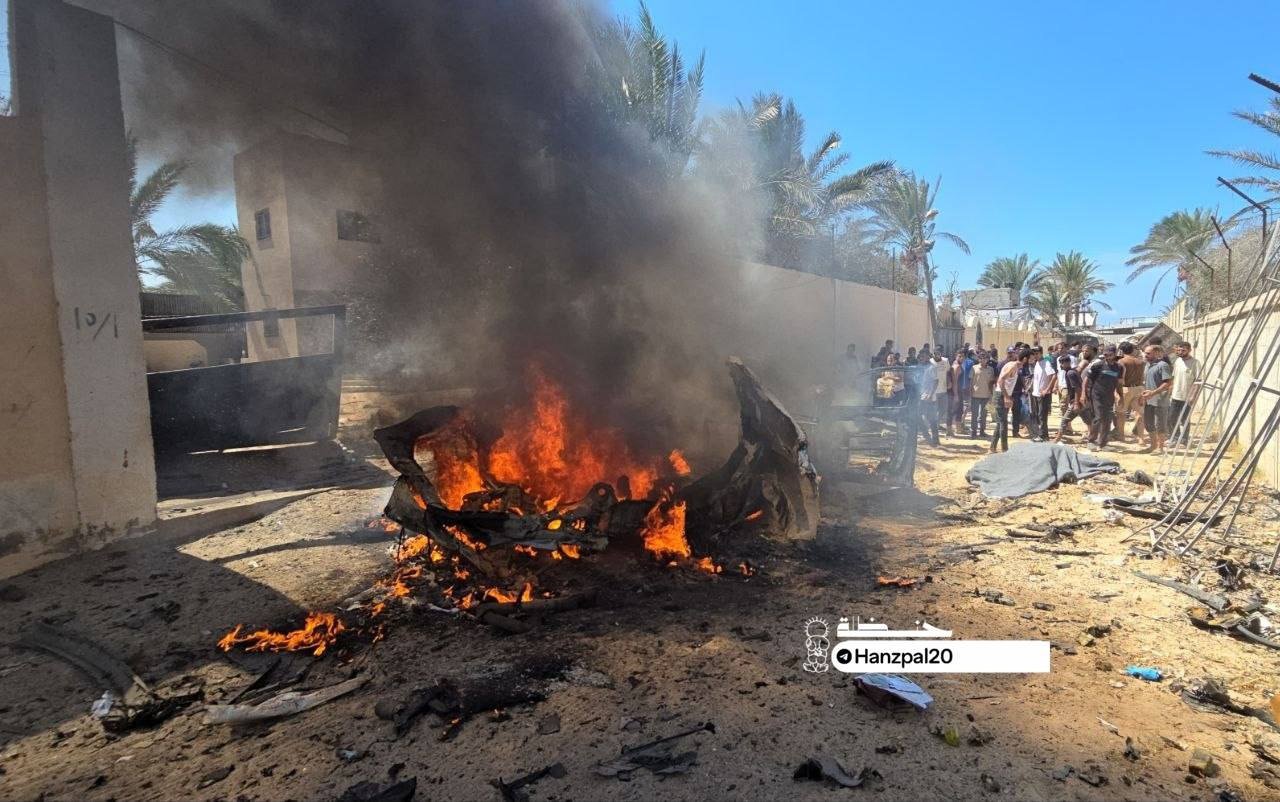 |
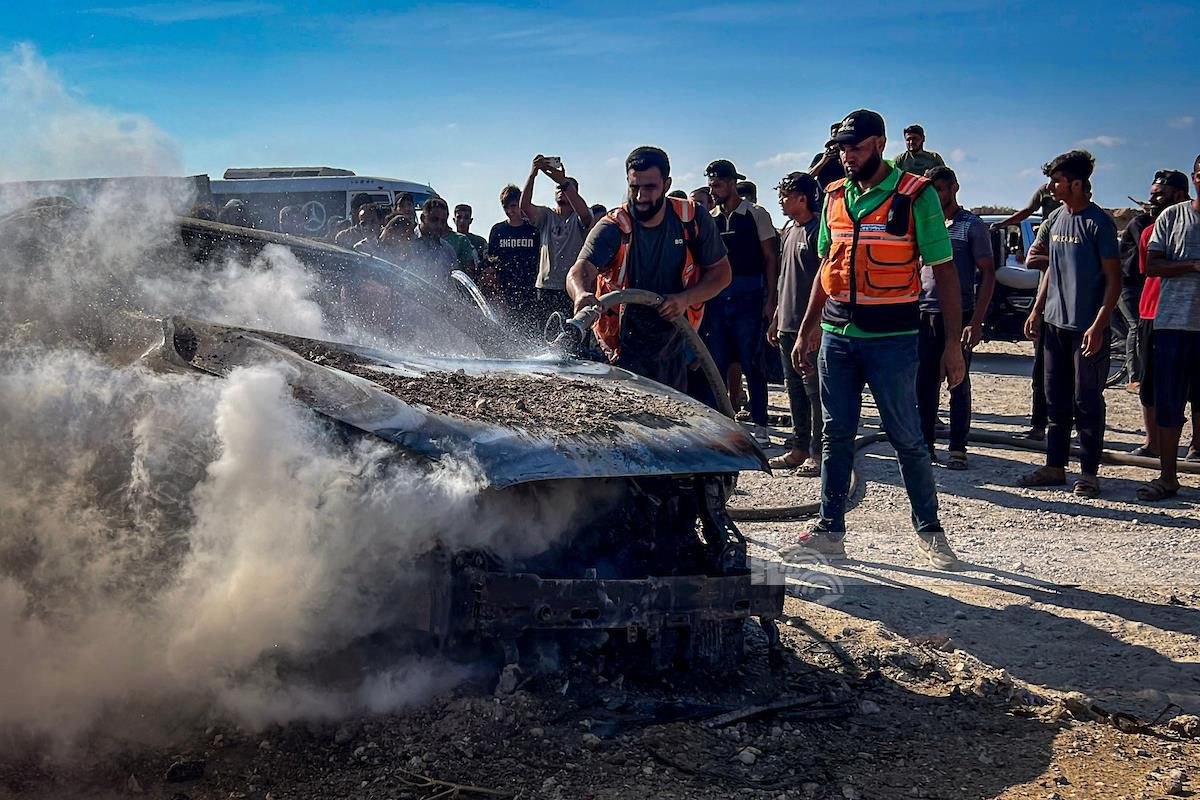
| The Palestinian death toll from the Israeli genocidal war on Gaza rose to 73,928 and the injuries to 175,030, as of September 25, 2026. | A Palestinian civilian was killed and several others were injured by an Israeli air strike on a vehicle, in El-Zawayida, in central Gaza Strip, September 24, 2026. |
 |
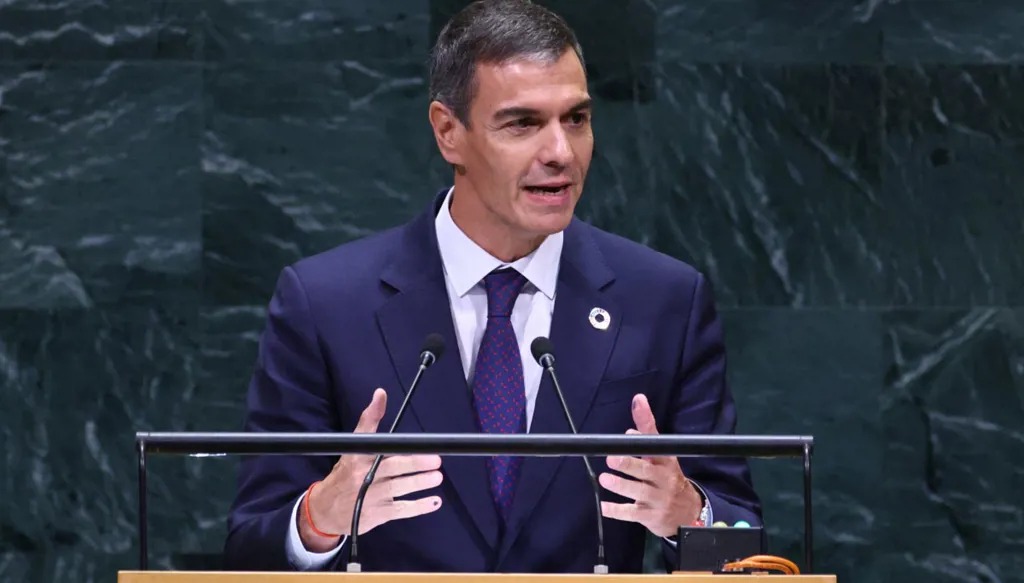 |
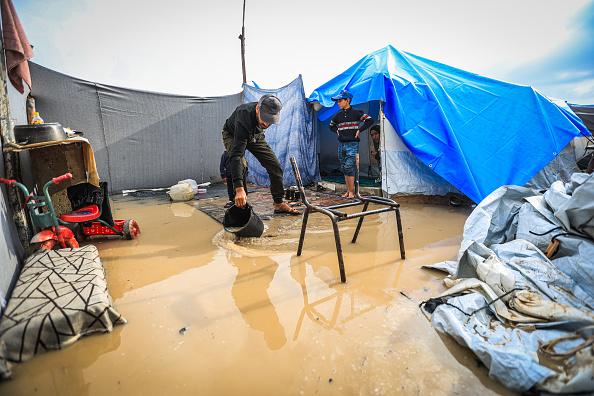
| The coming winter could be catastrophic, as 162,000 tents sheltering displaced Palestinian families in Gaza are completely out of service, September 24, 2026. | Spanish PM Pedro Sanchez criticized Israel over its war on Gaza during his UN address, accusing Netanyahu’s government of continuing genocide, September 24, 2026. |
As more Palestinians killed, the death toll from the Israeli genocidal war on Gaza rose to 73,928 and the injuries to 175,030, as of September 25, 2026, by September 26, 2026 |
|
***
 |
 |
||
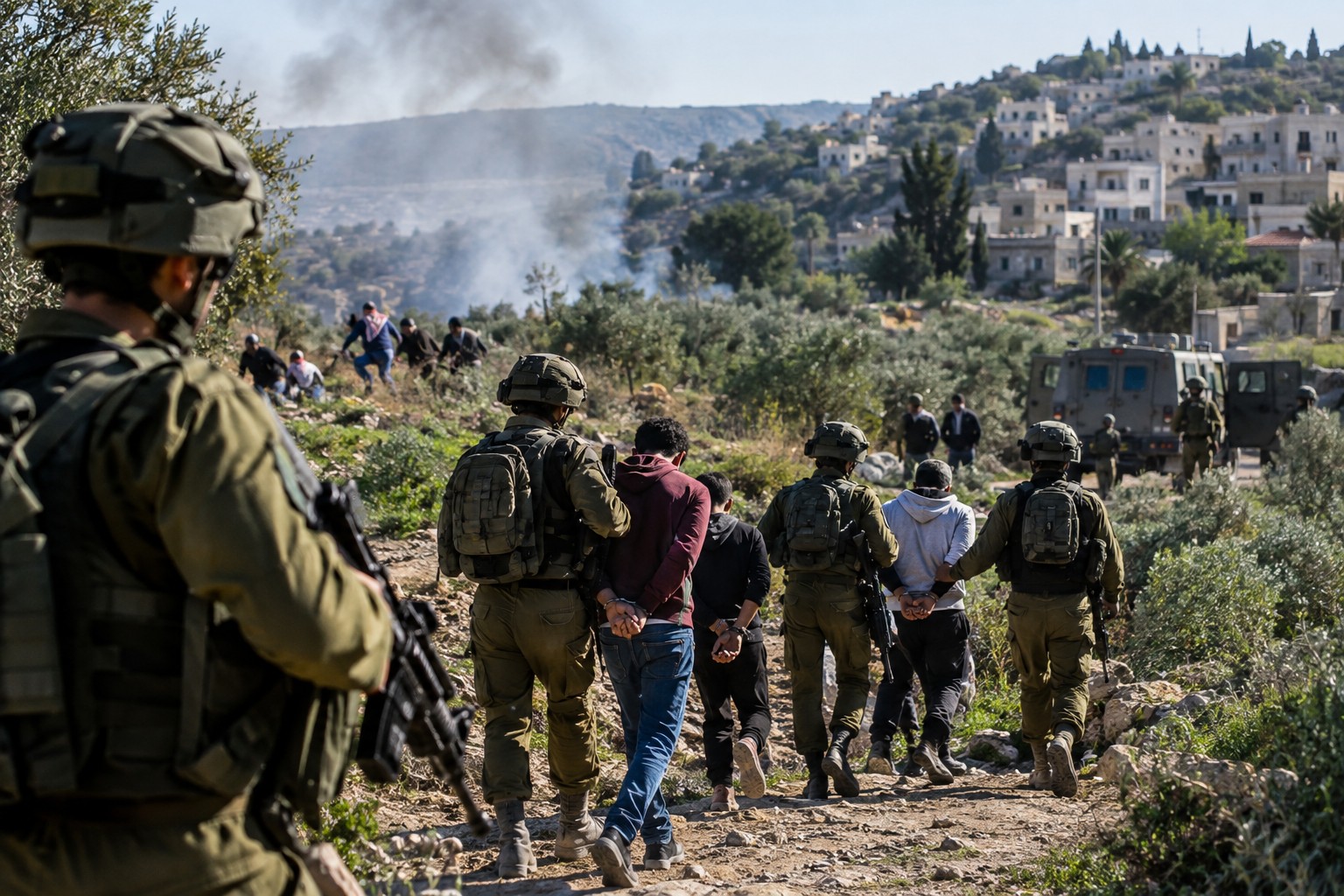
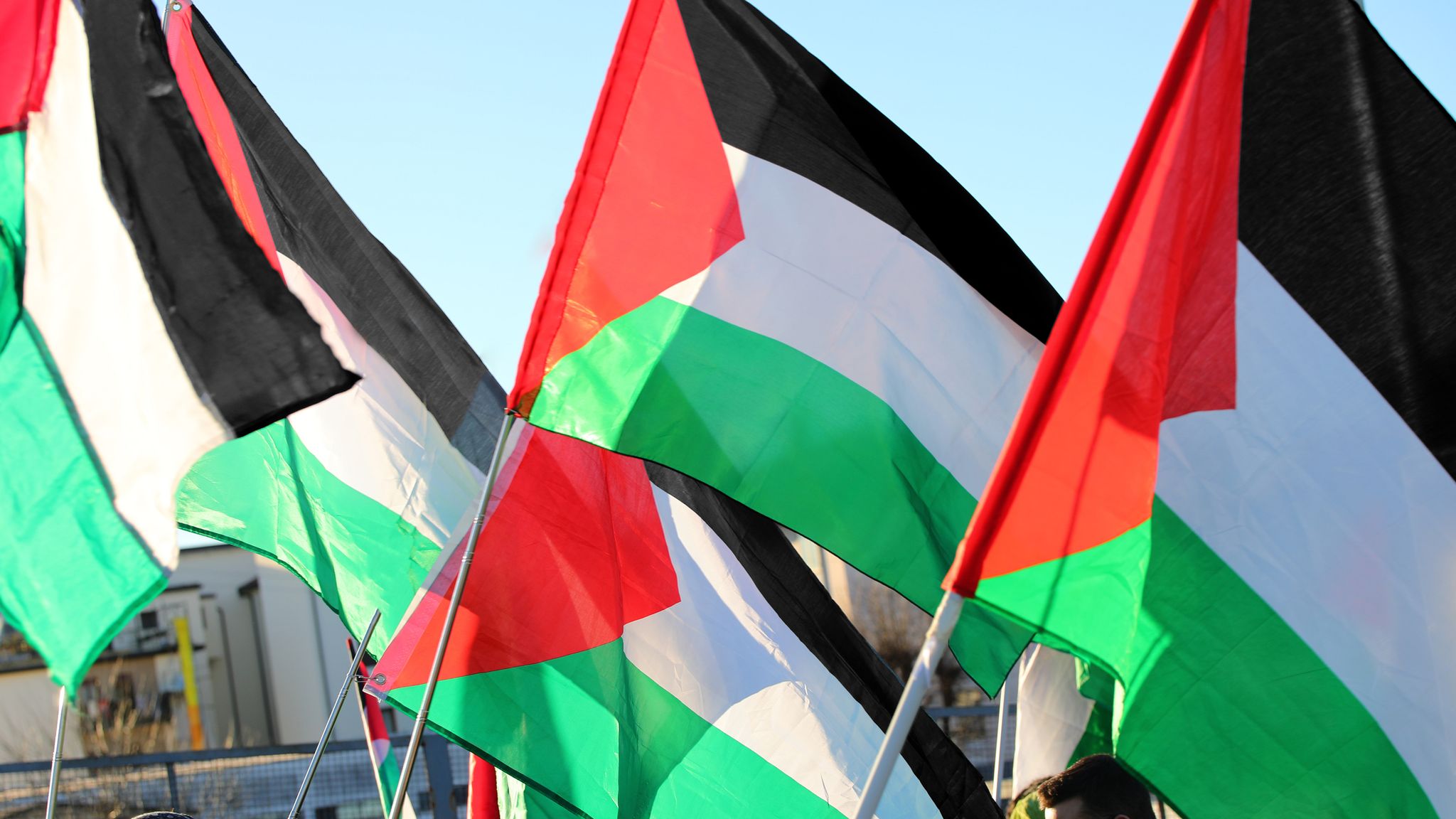
| Israeli occupation forces raid and illegal settlers attacked Palestinian towns, villages and neighborhoods in the West Bank and Al-Quds, September 25, 2026. | 1,000 Diaspora Palestinians signed a petition calling for the Palestinian National Council to be elected rather than formed through appointments, September 25, 2026. | ||
 |
|
||
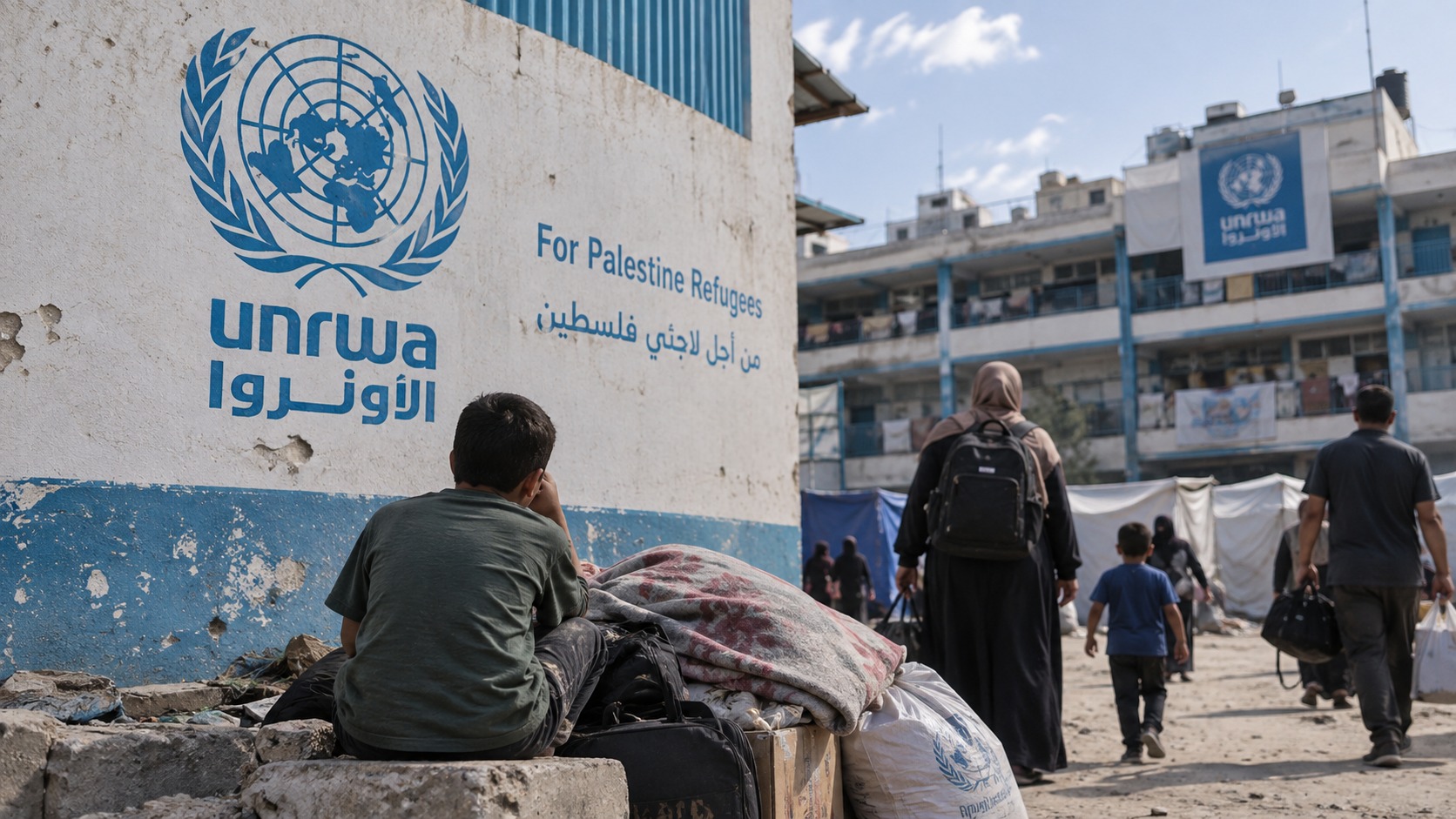
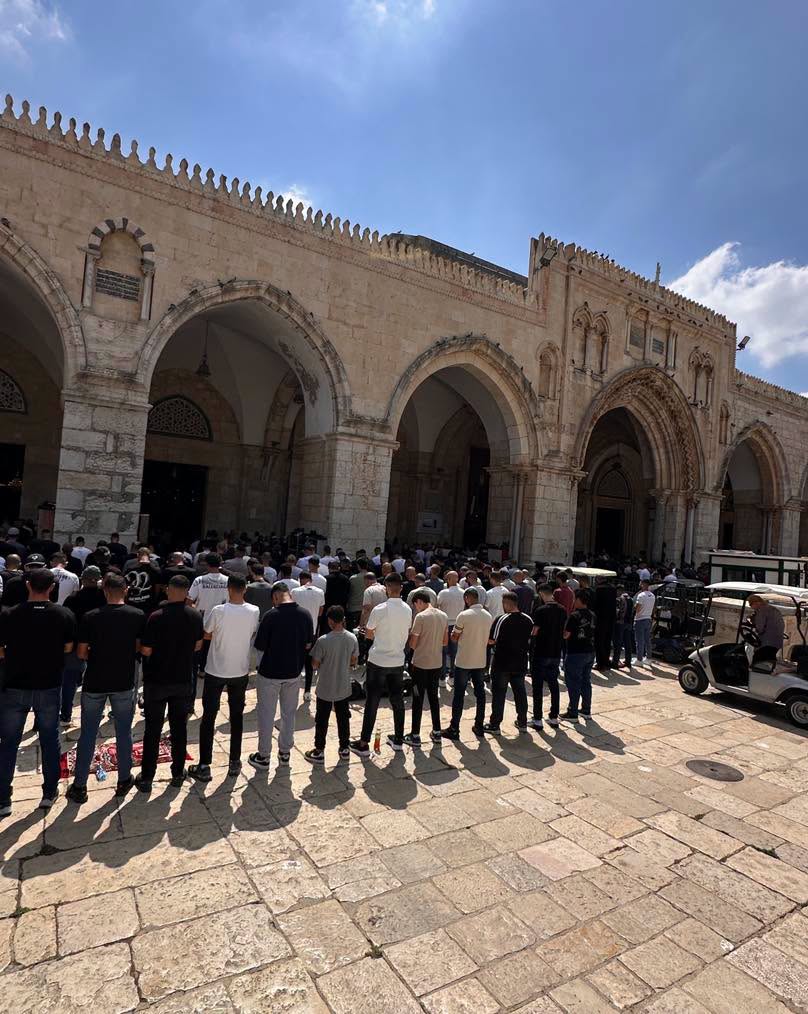
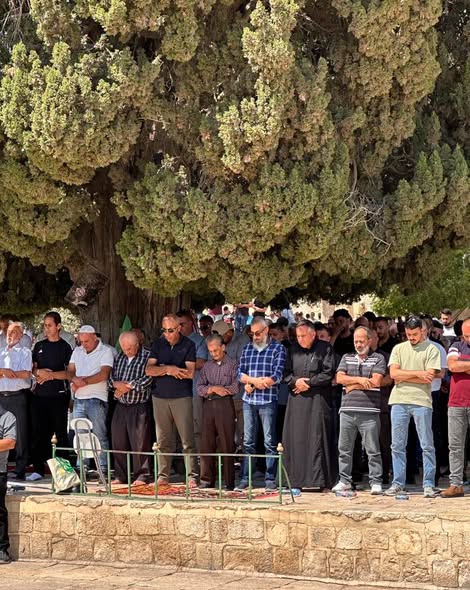
| In capitulation to the Israeli conditions, the Peace Council publicly excludes the UNRWA as back-channel talks shape its future role in Gaza, September 26, 2026. | Tens of thousands of Palestinians performed Friday prayer at Al-Aqsa Mosque, in Al-Quds, Jerusalem, despite the Israeli restrictions, September 25, 2026. | ||
 |
 |
||
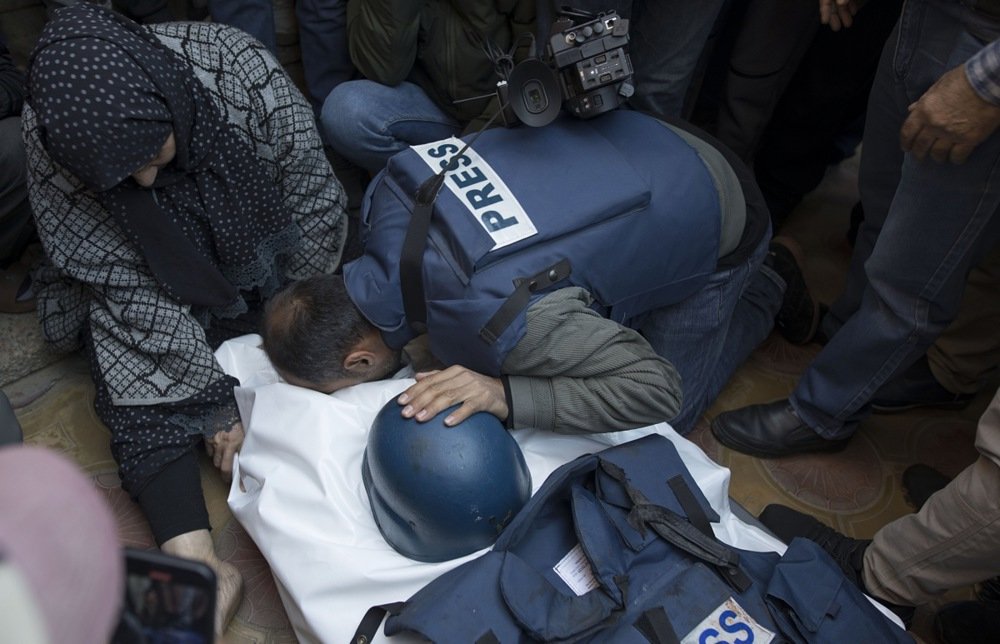
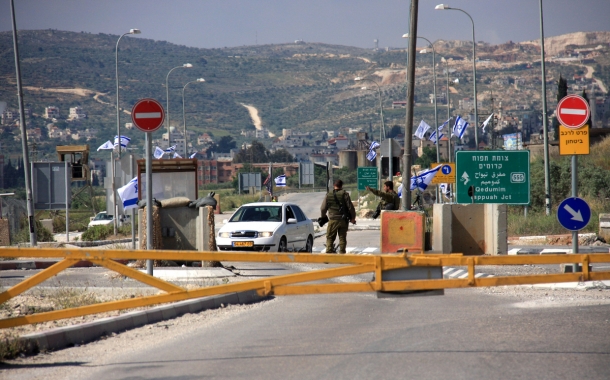
| 262 Palestinian journalists and media workers have been killed and over 400 others injured, by the Israeli occupation forces, by September 26, 2026. | 942 checkpoints, closures and obstacles have been imposed by the Israeli occupation forces across the Palestinian territory of the West Bank, by September 26, 2026. | ||
|
As Killing of Palestinians Continues in Gaza, Israeli Occupation Forces and Illegal Settlers Escalate Attacks on West Bank Towns and Villages, September 26, 2026 |
|||
***
***
***
One Palestinian killed, others injured by Israeli attacks on Gaza
Friday 25-September-2026
GAZA, (PIC)
Israeli violations of the ceasefire agreement in the Gaza Strip continued Friday, with gunfire, artillery shelling and attacks on border areas, alongside the demolition of buildings and facilities in several locations, killing one Palestinian and injuring others.
The ceasefire entered its 351st day as several areas across Gaza remained under Israeli gunfire, illumination flares and military activity. Field reports indicated continued shelling, shooting and demolitions across different parts of the enclave.
One Palestinian was killed and several others were injured in an Israeli drone strike west of Al-Aqsa University in the El-Mawasi area of Khan Younus, southern Gaza.
A PIC correspondent reported that the victim’s remains were recovered following a direct Israeli drone strike near the Wijdan camp, west of Al-Aqsa University.
Tent bombed in Al-Zawayda
Several Palestinians were injured in an Israeli strike targeting a tent in the El-Sawar'ha area of El-Zawayda in central Gaza.
An Israeli drone fired two missiles at El-Sawar'ha, while Israeli military vehicles opened heavy fire north and northeast of the El-Buraij refugee camp.
In Gaza City, Israeli military vehicles opened fire on areas northwest of the city, while Israeli helicopters fired on eastern Gaza City.
Israeli shelling and gunfire in southern Gaza
In southern Gaza, Israeli artillery shelled areas south of Khan Younus, while Israeli military vehicles opened heavy fire south and east of the city. Israeli helicopters also renewed their fire east of Khan Younus.
Israeli occupation forces fired illumination flares east of the town of El-Qarara, north of Khan Younus, amid continued military activity in areas near the border.
Rising death toll amid ceasefire violations
Medical sources reported Thursday evening that four Palestinians, including a girl, were killed amid continued Israeli attacks and ceasefire violations across the Gaza Strip.
According to the Gaza Health Ministry’s daily statistical report, hospitals received five Palestinians killed over the previous 24 hours, including one who succumbed to earlier injuries, as well as 35 wounded Palestinians.
Since the ceasefire took effect on October 11, 2025, Israeli attacks have killed 1,408 Palestinians and injured 4,916 others, while the bodies of 834 Palestinians have been recovered.
Since the beginning of Israel’s genocidal war on Gaza on October 7, 2023, the cumulative death toll has risen, to 73,928 Palestinians killed and 175,030 injured, according to the latest Health Ministry figures.
The violations continue as large areas of Gaza remain devastated and Palestinians endure displacement and deteriorating humanitarian conditions, with civilians still facing the threat of Israeli shelling and gunfire despite the ceasefire agreement.
***
Two Palestinians killed, many others injured by Israeli attacks on Gaza
Thursday 24-September-2026
GAZA, (PIC)
Two Palestinian citizens were martyred and several others were wounded in fresh Israeli attacks in the Gaza Strip on Thursday.
According to media sources, a young man was killed after being shot by the Israeli occupation forces west of El-Zahra town in central Gaza. The victim was identified as Muhannad Abu Middain.
Another civilian was killed and several others were wounded when an Israeli strike targeted a vehicle near the American field hospital in the town of El-Zawayida in central Gaza.
In southern Gaza, five people were injured, one of them critically, in an Israeli strike in central Khan Younus. They were transported to Nasir Hospital by civil defense workers.
In southern Gaza City, an Israeli airstrike hit a vehicle carrying the body of Jabr Muqbil in the Shaikh 'Ijleen neighborhood. Eyewitnesses said several of his relatives were critically injured and Muqbil’s body was charred after being struck for the second time in hours.
In El-Nusayrat refugee camp in central Gaza, a woman was wounded by Israeli gunfire on Street 20, while another civilian was injured by fire from an Israeli tank in El-Buraij refugee camp.
Meanwhile, widespread military activity, including artillery shelling, drone overflights, and demolitions, was reported in other areas of Gaza today.
***
Gaza: Death toll climbs to 73,928 martyrs
Thursday 24-September-2026
GAZA, (PIC)
The death toll from the Israeli genocidal war on the Gaza Strip, which started on October 7, 2023, has surged to 73,928 martyrs, according to the health ministry on Thursday morning.
The ministry added that the total number of the wounded also surged to 175,030 people.
In its daily report, the health ministry said that hospitals received four civilian bodies and 35 wounded people over the past 24 hours, while another citizen died of injuries sustained in an earlier attack.
Since the ceasefire agreement took effect on October 10, 2025, at least 1,408 Palestinians have been killed, and 4,916 others have been injured.
***
Gaza winter approaches, as 162,000 tents fall out of use
Thursday 24-September-2026
GAZA, (PIC)
As winter approaches, fears are growing that hundreds of thousands of displaced people in Gaza will face cold, rain and flooding with little protection, amid deteriorating displacement camps, worn-out tents and severe shortages of shelter supplies.
Isma'eel El-Thawabta, director general of Gaza’s Government Media Office, warned that the coming winter could be “catastrophic” if the shelter crisis continues without urgent intervention.
He said a field assessment by government teams found that 162,000 out of 270,000 tents sheltering displaced families across Gaza are now completely out of service.
According to El-Thawabta, more than 60% of existing tents can no longer provide minimum protection from wind, rain and winter cold, placing children, women, patients and other displaced people at direct risk.
UNICEF has also warned that around 84% of Gaza’s population, or more than 1.76 million people, remain in overcrowded displacement sites or damaged and unsuitable shelters, leaving them exposed to cold weather, heavy rain and flooding.
The agency said children, especially infants and those with health conditions, face growing risks of hypothermia, respiratory infections and waterborne diseases. It noted that at least 11 children in Gaza, including infants, died from hypothermia last winter.
UNICEF has appealed for $97.5 million for its winter response in Gaza and the West Bank from October 2026 to March 2027, aiming to protect 540,000 children and their families through clothing, thermal blankets, shelter reinforcement and tents.
OCHA has also warned that preparations for winter are being obstructed by shortages of equipment, fuel, spare parts and basic materials, along with restrictions on the entry of tents, tarps and other essential supplies.
The shelter crisis is not limited to tents. Many families continue to live in damaged buildings because no safer alternatives are available. The collapse of a damaged residential building in Gaza City on September 16, which killed 21 people, including 12 children, highlighted the danger.
With winter approaching, Gaza’s worn-out tents, damaged buildings and flood-prone areas form one urgent humanitarian crisis, requiring immediate shelter support to prevent further losses among displaced families and vulnerable groups.
***
More than 1,000 Palestinian figures call for an elected National Council and diaspora representation
Friday 25-September-2026
LONDON, (PIC)
More than 1,000 people have signed a Palestinian petition calling for the Palestinian National Council (PNC) to be elected rather than formed through appointments, according to a document reviewed by Al-Arab in UK. The petition places the participation of Palestinians in the diaspora, including those living in Britain, at the center of efforts to renew national representation.
The Palestinian National Authority for Popular Action launched the petition in August 2026 under the slogan “No legitimacy through appointment, and no representation without elections.” It calls for free, fair and inclusive elections that allow Palestinians to choose their representatives, while rejecting exclusion, interference in the electoral process and attempts to disregard the results.
What does the petition demand?
The petition states that the Palestinian people are the source of national legitimacy and that this legitimacy must be renewed through the election of their representatives and leaders. It calls for every Palestinian to have the right to vote and stand for election, without discrimination or political conditions that restrict their choice.
It also demands equal opportunities for candidates and political groups, safeguards against fraud and interference, and respect for election results. The signatories reject postponing elections or using appointments in their place, whether on the basis of organizational positions, administrative roles or a political fait accompli.
These demands come amid debate over the composition of the PNC and the rebuilding of the institutions of the Palestine Liberation Organization (PLO). The petition raises a central question: how can a representative body derive its legitimacy from Palestinians if they have no say in choosing its members?
Palestinians in Britain and across the diaspora
The petition gives Palestinians living outside their homeland a central place in its demands. Its signatories argue that Palestinians at home and abroad are one people, and that those living in refugee communities and countries of migration must have a voice in national decisions. They call for fair and meaningful representation on the PNC, including for Palestinians in refugee camps and communities across the Arab world and beyond.
In the signatories’ view, the PNC cannot reflect the will of the Palestinian people if millions living in the diaspora are excluded or represented by people they did not choose. The petition also rejects internal or external pressure on the electoral process.
Britain is among the countries where signatories live, alongside Türkiye, Syria, Jordan, Lebanon, Sweden, Qatar, Germany, Denmark and others. The document records participation from Palestinians in Damascus and surrounding areas, including the Yarmouk, El-Husayniya, Subaineh and Khan El-Shi'h communities, as well as Tal Shihab and El-Muzayrib in southern Syria.
According to the document, signatories’ families trace their roots to Palestinian cities and towns, including Gaza, Safad, Al-Quds (Jerusalem), El-Khaleel, 'Hayfa, Ramallah, Yafa, Nablus, Jineen, and Bait La'hm (Bethlehem). The list brings together people working in politics, journalism, academia, medicine, engineering, law, trade unions and community organizations, as well as students, businesspeople and grassroots activists.
Who has signed?
Among the names listed in the document are Mustafa El-Barghouthi, Wadhah Khanfar, Hassan Khuraisheh, Mu'een El-Taher, Salah Salah, Fayiz Abu Shammala, A'hmed Ghonaim, 'Oraib El-Rintawi, Majid El-Zeer, Hisham Abu Ma'hfoudth, Sami El-'Aryan, A'hmed Mu'haysin, Mousa Sali'h, Mu'awiya El-Masri, Ruba El-Masrouji, 'Omar 'Assaf, Mo'hsin Sali'h, Luna Abu Suwaireh and Osama Abu Irshaid.
Other signatories named include 'Adnan Humidan, A'hmed El-'Atawneh, Khalid Fahd, Kamilin Sha'ath, Faris Fa'hmawi, Fayiz El-Suwaiti, Mu'hammed Mushaish, Riyadh Masharqa, Tariq 'Hammoud, Nawwaf El-Takrouri, Ziyad El-'Aloul, Firas Abu Hilal, 'Hafidth El-Karmi, Ibraheem El-'Ali, Fidaa El-Zummar, Ashraf Nasrallah, Kadthim 'Aayish, Iyad Abdul 'Aal, A'hmed Howaidi, Anas El-Hajj, 'Adnan Abu Shaqra, and 'Ali Huwaidi.
The document also lists Bassam Badareen, Zahir Birawi, Salim 'Aasi, 'Husain El-'Hijjawi, 'Husam El-Dajani, Sa'eeda Abu El-Baha, Khalid 'Hunain, George 'Haddad, 'Husam El-Dakki, 'Husain Abu Qalleen, Mu'hammed Ameen, former prisoner 'Othman Bilal, Khadir El-Mashayikh, Khaleel El-Bayouk, Mu'een Na'eem and PNC member Samir 'Owais.
The petition identifies a number of signatories by their work or place of residence. They include Suhail Salman, head of the Anti-Wall Committee in Tulkarem; doctor and activist Khalid El-Jabbah; US-based activist Talal El-Burno; Britain-based visual artist Beesan 'Arafat; Razan Akram Zuayter, president of the Arab Group for the Protection of Nature; Mahir El-Nimri, an activist involved in Jerusalem-based associations; and Nimr Abu Ghunaim, an activist in Jordan’s Baqa’a refugee camp.
Also listed are cardiologist and activist Osama 'Akka; businessman Bassam Ma'hous; Rakan Ma'hmoud, president of the Irbid Camp Club; journalist Ziyad Khaddash of Ramallah; doctor and political activist Nidhal Marqa; and 'Husain El-Shaikh 'Ali, head of the Wadi El-Hawarith Association in Toulkarm.
Further signatories include 'Aatif Safi, who has spent decades documenting the residents and lands of the village of Bait Nabala; Abdul Fatta'h El-Suwais, vice-president of the 'Hanouneh Association for Popular Culture; Wajeeh Safi, president of the Bait Nabala Association in Jordan; doctor and activist 'Abeer 'Annab; political science doctorate holder Amjad Rafeeq Shihab; and Switzerland-based trade union activist Osama 'Amr.
The document also names Britain-based lawyer Adnan al-Sabah, Gaza-based writer Adnan Ibrahim Sabah, Imad El-Ifranji, 'Eisa El-Suwais, Ghassan Abu 'Husain and Abdul Majeed Shadeed.
The petition sums up its position with the words: “No legitimacy through appointment, and no representation without elections.” For its signatories, renewing Palestinian national institutions begins by allowing Palestinians everywhere, at home and across the diaspora, to choose their representatives and take part in national decision-making.
***
***Killing, Injuring, and Abduction of Palestinians in the West Bank by Israeli Occupation Regime Forces
***
IOFs raid the West Bank as attacks by the illegal Israeli settlers escalate
Friday 25-September-2026
WEST BANK, (PIC)
The Israeli occupation forces (IOFs) carried out a series of raids across towns, villages and neighborhoods in the West Bank and Al-Quds (occupied Jerusalem), early on Friday, searching homes as illegal Israeli settlers simultaneously attacked Palestinians and their property.
In the Ramallah and al-Beereh governorate, the IOFs raided the village of 'Abboud, northwest of Ramallah, the town of Silwad, northeast of the city, and the El-Teereh neighborhood in Ramallah. The IOFs also searched a home during a raid on the 'Ain Misbah neighborhood.
At the same time, the illegal Israeli Jewish settlers assaulted a Palestinian girl near the Carmelo checkpoint east of Ramallah.
In Nablus, Israeli forces raided the village of Rujeib and searched a home, while settlers attacked Palestinian vehicles near the Yitzhar settlement south of Nablus.
Israeli forces also raided the towns of Bal’a and 'Allar in the Tulkarem governorate.
In Qalqilya, raids extended to the towns of 'Habla and Ras 'Atiya, while the IOF troops searched several homes in Bait Ameen and 'Izbat Salman.
In Jenin, Israeli forces raided Qabatiya, south of the city, and searched several homes before extending their operations to the towns of Miseelyah and 'Ajjah.
In Occupied Jerusalem, Israeli forces raided Silwan and the 'Ain El-Loaza neighborhood, south of Al-Aqsa Mosque. Local sources reported that a young Palestinian man was shot and wounded by Israeli forces during the raid.
The raids come amid continuing Israeli military incursions and settler attacks across the occupied West Bank and Jerusalem, targeting Palestinians and their property.
Attacks by the illegal Israeli settlers continue across the West Bank
The illegal Israeli Jewish settlers carried out a series of attacks across the occupied West Bank over the past 24 hours, including setting vehicles on fire, attacking Palestinian communities and attempting to expand settlement outposts.
In Ramallah, settlers attacked the village of Rantees west of the city overnight, spray-painted hostile slogans and attempted to set vehicles on fire before residents confronted them.
In 'Atara, north of Ramallah, settlers set two vehicles on fire and spray-painted hostile slogans during an attack on the town.
In Nablus, settlers dismantled an outpost east of Bait Dajan and relocated it to the El-Dthahr area east of Bait Foureek in an apparent attempt to expand their control over land belonging to the two communities and increase pressure on Palestinian farmers ahead of the olive harvest season.
In El-Khaleel (Hebron), settlers raided Khirbet 'Huraibat El-Nabi in Masafir Yatta, south of the city, and set fire to a vehicle.
The illegal Israeli settlers also attacked a vehicle belonging to Bilal Masalmeh, from the town of Sinjil, as he traveled along the Turmus 'Ayya road north of Ramallah. Other settlers grazed their sheep on Palestinian land in the village of El-Mughayyir, east of Ramallah.
***
942 Israeli checkpoints and barriers: Closure system reshapes the Palestinian territory of the West Bank geography
Friday 25-September-2026
WEST BANK, (PIC)
Checkpoints and military gates across the West Bank are no longer merely inspection points obstructing Palestinian movement. According to the Colonization and Wall Resistance Commission, they have evolved into an extensive system for controlling movement and access, stretching across the entrances to cities, towns and villages and along the roads connecting them.
The expanding system is reshaping Palestinian geography, making travel, work, education, medical treatment and access to agricultural land increasingly dependent on a growing network of closures.
According to the Commission’s latest data, 942 checkpoints, closures and other movement obstacles have been documented across the West Bank. These include 824 fixed checkpoints and closure points and 118 linear obstacles, including earth mounds, trenches and road barriers. Data from the UN Office for the Coordination of Humanitarian Affairs (OCHA) puts the combined length of these linear obstacles at approximately 107.7 kilometers.
A network fragmenting West Bank
The Colonization and Wall Resistance Commission said the proliferation of checkpoints, gates, earth mounds and trenches at community entrances and key road junctions is transforming Palestinian geographic continuity into a network of controlled routes, allowing different parts of the West Bank to be separated, connected or closed at any time.
The Commission said military checkpoints no longer serve merely to prevent passage but have become a means of controlling access to workplaces, schools, healthcare facilities, agricultural land and service centers, increasing the cost of daily life and further restricting Palestinians’ freedom of movement and stability.
UN data indicates that around half of documented movement obstacles impede access between Palestinian towns and villages and major roads. These restrictions force Palestinians onto longer routes and secondary road networks, affecting access to employment and essential services.
Al-Khalil records the highest number
The geographical distribution of fixed checkpoints and closure points varies significantly across the West Bank, with al-Khalil recording the highest number at 221, followed by Ramallah and El-Beereh with 160, Nablus with 120, Bethlehem with 78 and Jerusalem with 62.
Qalqilya has 41 fixed checkpoints and closure points, Salfeet 40, and Jericho and the Jordan Valley 27. Jenin and Tulkarem each have 26, while Tubas has 23.
The Commission said these figures represent more than simply a concentration of physical barriers. They reveal a network of control points positioned at community entrances, road junctions and corridors connecting villages and rural areas with urban centers and essential services.
13 Israeli checkpoints and gates in two months
The closure system continues to expand. The Commission said it documented 13 new gates and fixed checkpoints over the past two months, including 10 in the Jenin governorate alone, raising the number of fixed closure points there from 16 to 26.
The newly documented locations include areas around Al-Jalama, 'Arrana, the industrial zone, Dair Abu Da’if, the entrance to Jenin, Abba, Umm El-Toot and Qabatya, as well as the vicinity of the Arab American University and the Zababdeh junction.
A new gate was also documented on the Al-Jariyout road west of Ramallah, alongside additional gates in rural areas west and northwest of the governorate.
The increase forms part of a broader trend documented by the United Nations. OCHA recorded 925 movement obstacles across the West Bank as of December 2025, including checkpoints, gates, blocked roads, earth mounds and other barriers, the highest level documented in its data for that period.
Settler gates: New element in closure system
One of the most notable recent developments documented by the Commission is the emergence of Israeli settlers as direct participants in establishing gates and other barriers inside Palestinian areas, rather than merely benefiting from the closure system imposed by the Israeli military.
In the Wadi 'Hamad area on the lands of Kafr Ni’ma, Israeli settlers installed an iron gate controlling access to the area and surrounding land. Another gate was erected east of Umm Safa on a road leading to a Palestinian family’s home and was later used to restrict the family’s access.
The Commission said the significance of these cases lies not simply in the number of gates but in the emergence of another actor directly exercising control over roads and determining who can pass and when.
A gate does not have to remain permanently closed to serve this purpose, the Commission said. Its presence alone makes access subject to restriction at any time, effectively giving those controlling it the ability to regulate Palestinian movement and access to homes and land.
From 757 obstacles to 942
Historical data shows that the West Bank closure system has not expanded at a constant rate but through successive waves associated with different phases of Israeli control over Palestinian movement.
In 2003, at the height of the Second Intifada, international organizations, including OCHA, documented 757 checkpoints and other obstacles, including 464 earth mounds.
The number stood at 630 in 2008 before rising to 705 in 2018, as gates and checkpoints with permanent infrastructure became increasingly prominent within the closure system.
According to OCHA data, the number of movement obstacles reached 793 in March 2024 and rose to 925 by December 2025. More than 120 new road gates were installed during 2025 alone. Checkpoints and gates now account for a larger share of movement restrictions than they did two decades ago.
Controlling roads, controlling daily life
The consequences extend far beyond delays at checkpoints. A recent economic study by the Palestine Economic Policy Research Institute (MAS) found that movement restrictions in the northern and central West Bank led to a 51.7% decline in transportation activity within the study sample after October 2023, while waiting times at several checkpoints ranged from 15 to 50 minutes.
The study estimated that approximately 191,000 working hours are lost every day, alongside additional fuel costs as vehicles are forced to take longer routes to avoid checkpoints.
In this context, the figure of 942 checkpoints and barriers represents far more than the number of physical obstacles scattered across West Bank roads. It reflects an interconnected system controlling access between Palestinian villages and cities, between Palestinians and their land, and between communities and centers of employment, education, healthcare and other essential services.
As new gates and checkpoints continue to be added, the closure system is further entrenching a fragmented geographical situation in which Palestinian freedom of movement increasingly depends on whether a road is open or closed, and on decisions made at checkpoints and gates that can restrict access at any moment.
***
'Hamas marking tunnel uprising anniversary: Israel has no sovereignty over Al-Aqsa Mosque
Friday 25-September-2026
Al-Quds (Jerusalem), (PIC)
The 'Hamas Movement said on Friday that Israel has no sovereignty or legitimacy over any part of Al-Aqsa Mosque or the city of Al-Quds (Jerusalem), stressing that the Palestinian people will continue their struggle and defense of their land and holy sites until the end of the Israeli occupation of Palestine.
The statement came on the 30th anniversary of the “tunnel uprising,” which broke out in September 1996 after Israeli occupation apartheid regime opened a tunnel beneath the western wall of Al-Aqsa Mosque. The move triggered confrontations that lasted for about six months, killing nearly 100 Palestinians and wounding more than 1,600 others.
Al-Quds (Jerusalem) and Al-Aqsa facing Israeli plans
Hamas said the anniversary comes amid escalating Israeli aggression against Jerusalem, Al-Aqsa Mosque and the occupied West Bank, as part of efforts to impose sovereignty over the city and erase its Arab and Islamic identity.
The Movement said these developments coincide with the ongoing Israeli assault on the Gaza Strip, adding that what is happening in Jerusalem, the West Bank and Gaza forms part of a broader path targeting Palestinian land, identity and holy sites.
Hamas said the blood of Palestinians killed in the uprising would remain a motive to continue resistance, stressing that Al-Aqsa Mosque will remain an exclusively Islamic endowment and that attempts to impose division or a new reality will not change that fact.
Call for action in support of Al-Quds (Jerusalem)
'Hamas praised the steadfastness of Palestinian worshipers and defenders of Al-Aqsa Mosque in Al-Quds (Jerusalem). It called on Palestinians and the Arab and Islamic nation, including leaders and peoples, to shoulder their responsibilities and take effective action to support the people ofAl-Quds (Jerusalem) and confront Israeli plans targeting the city’s identity and its Islamic and Christian holy sites.
The Movement said the tunnel uprising remains a key moment in the history of Palestinian confrontation in defense of Al-Aqsa Mosque and Al-Quds (Jerusalem), recalling the sacrifices made during the uprising and reaffirming Palestinians’ commitment to their holy sites and rejection of any attempt to impose a new reality on them.
***
***
Aggression and Attacks by Illegal Israeli Settlers and Soldiers
***
Tens of thousands of Palestinian Muslims attend Friday prayer at Al-Aqsa Mosque despite the Israeli restrictions
Friday 25-September-2026
Al-Quds (Jerusalem), (PIC)
Tens of thousands of Palestinians performed Friday prayer at Aqsa Mosque on Friday despite restrictions imposed by the Israeli occupation police forces on Palestinians seeking to reach Al-Quds (Jerusalem).
The Islamic Waqf Department in Jerusalem said tens of thousands of worshipers were able to perform prayer at Al-Aqsa Mosque amid heightened Israeli military measures around the city and the Old City.
The Israeli occupation forces imposed restrictions on worshipers seeking to reach the Mosque and deployed checkpoints and metal barriers around Al-Quds (Jerusalem), the Old City and Al-Aqsa Mosque.
The measures prevented a number of young Palestinian men from reaching Aqsa after Israeli forces stopped them at checkpoints around the city and the Old City and barred them from continuing to the Mosque.
Despite the restrictions, Palestinians from across Occupied Jerusalem made their way to Aqsa, where tens of thousands gathered for Friday prayer.
Researcher warns of escalation during Sukkot
Al-Quds (Jerusalem) affairs researcher Ziyad Ibhais warned that Aqsa Mosque faces a new period of escalation with the start of the Jewish holiday of Sukkot, which begins Saturday, September 26, and continues through Friday, October 2.
Ibhais said the holiday has increasingly become a major period for intensified incursions into Aqsa and attempts to perform Jewish religious rituals inside the Mosque compound.
He explained that Sukkot, also known as the Feast of Tabernacles, is one of the three pilgrimage festivals in the Torah. According to Ibhais, groups advocating the construction of a Jewish temple at the site use the holiday to increase the number of Israelis entering the compound and push for the performance of religious rituals there.
Ibhais said these groups use religious symbols associated with Sukkot in three main ways: intensifying incursions into Al-Aqsa, attempting to introduce what they describe as plant offerings and related rituals inside the compound, and establishing a sukkah near the Magharibeh Gate to serve Israelis entering the site.
According to figures compiled by Ibhais, Sukkot has recorded some of the highest numbers of Jewish settlers entering Al-Aqsa in recent years. Around 5,980 settlers entered the Mosque compound over five days of the holiday in 2024, averaging 1,196 per day.
In 2025, the figure rose to 7,119 over five days, an average of 1,424 per day and a 19% increase from the previous year.
Ibhais argued that temple groups are using Sukkot not merely as a religious occasion but as a means of establishing new realities at Aqsa, gradually moving from entering the compound to performing religious rituals and seeking to establish a permanent Jewish religious presence within and around it.
He warned that the coming days could see an increase in the number of settlers entering Al-Aqsa Mosque and further attempts to introduce religious objects and rituals into the compound, particularly as Sukkot falls within a broader period of Jewish holidays.
Ibhais concluded by calling for a stronger Palestinian presence at Al-Aqsa and urged Palestinians to travel to the Mosque and maintain a continuous presence there, saying that such mobilization has previously helped confront attempts to impose new realities at the site.
***
Israeli demolitions leave 176 homeless in W. Bank village of Jinba
Thursday 24-September-2026
El-Khaleel (Hebron), (PIC)
The Israeli occupation army demolished dozens of homes and structures in the Palestinian village of Jinba in the West Bank on Wednesday, leaving about 176 people homeless, mostly women and children.
According to media sources, bulldozers escorted by Israeli military and police forces demolished 24 homes, as well as several agricultural structures, kitchens, bathrooms, solar panels, water tanks, and trees, in the village of Jinba, which is located in the far southeast of Masafir Yatta, south of El-Khaleel (Hebron) governorate.
The demolitions displaced 26 families totaling 176 people, about 70 percent of them women and children, and deprived them of their livelihoods and basic necessities.
Rights activists and news reporters visited the community after the demolitions and found families searching through the rubble for what was left of their belongings.
The demolitions come amid an escalation in the destruction of Palestinian homes in Masafir Yatta.
It was the third large-scale demolition in the Masafir Yatta area in three weeks.
On September 2, Israeli forces demolished almost all of Khirbet El-Tabban, including 12 homes housing about 70 people, 28 of them children.
A week later, all five homes in Khirbet El-Fakheet were demolished, displacing 32 people. Livestock pens, water and solar energy facilities, and agricultural structures were also destroyed.
Much of Masafir Yatta has been classified by Israel as a military training zone since the 1980s, leaving Palestinian residents facing longstanding demolition and eviction orders.
However, the forced displacement of hundreds of people in the region has surged since October 2023.
***
***
News Related to the Israeli Genocidal War on the Palestinian People
***
Spanish PM accuses Israel of continuing genocide in Gaza at UN
Thursday 24-September-2026
NEW YORK, (PIC)
Spanish Prime Minister Pedro Sánchez sharply criticized Israel over its war on Gaza during his address to the 81st session of the UN General Assembly in New York, accusing Benjamin Netanyahu’s government of continuing genocide in the territory.
Sánchez said his government “unreservedly condemns” the ongoing genocide in Gaza and criticized double standards in the international response to wars and crises.
He warned against efforts to undermine the United Nations and the multilateral system, calling for adherence to international law, support for international judicial institutions and accountability for those responsible for violations.
The Spanish position comes within Madrid’s broader policy toward the war in Gaza. Spain officially recognized the State of Palestine in May 2024 alongside Ireland and Norway, imposed restrictions related to military ties with Israel, and pushed within the European Union for a review of relations with Tel Aviv over the situation in Gaza.
Sánchez’s remarks came amid growing criticism of Israel at the UN General Assembly, where several world leaders addressed the war in Gaza and conditions in the occupied Palestinian territories.
Turkish President Recep Tayyip Erdoğan criticized Israel’s “genocidal mentality,” while UN Secretary-General António Guterres warned that the scale of killing and destruction in Gaza exceeded what he had witnessed in years of humanitarian work.
Brazilian President Luiz Inácio Lula da Silva also blamed Netanyahu’s government for genocide in Gaza, while French President Emmanuel Macron addressed the humanitarian situation in Gaza and Israeli policies in the West Bank.
The statements come as the General Assembly continues amid wide debate over the war in Gaza, conditions in the West Bank, the future of the Palestinian issue and mechanisms for international accountability.
***
'Hamas calls for global solidarity with Palestinian journalists
Saturday 26-September-2026
GAZA, (PIC)
The 'Hamas Movement has called on international press organizations and journalists’ unions to stand in solidarity with Palestinian journalists, make efforts to provide them with protection, and seek accountability for abuses against them.
This came in a statement released by the Movement on Saturday to mark the International Day of Solidarity with Palestinian Journalists.
'Hamas said Palestinian journalists continue to perform their mission despite the destruction and shutdown of media institutions and their ongoing exposure to killings, arrests, and injuries.
'Hamas accused the Israeli occupation army of deliberately targeting media workers and preventing foreign journalists from entering Gaza to report on developments and conditions on the ground.
'Hamas also condemned social media platforms for restricting Palestinian news accounts and censoring their content, urging regional and global media organizations to cover events in the Palestinian arena.
According to the Movement, more than 262 Palestinian journalists and media workers have been killed and over 400 others have been injured, by the Israeli occupation forces, since October 7, 2023.
***
Guterres: UNRWA is indispensable and irreplaceable
Friday 25-September-2026
NEW YORK, (PIC)
UN Secretary-General António Guterres affirmed that the United Nations Relief and Works Agency for Palestine Refugees in the Near East (UNRWA) is indispensable and irreplaceable, calling on member states to provide political and financial support to the agency and protect its mandate and role in serving Palestinian refugees.
This came during a ministerial meeting held on Thursday night at the UN headquarters, with the participation and sponsorship of Jordan, Brazil, and Spain, to discuss ways to mobilize political and financial support for UNRWA, and to emphasize the importance of the role assigned to it by the UN General Assembly.
Guterres said that UNRWA has for decades, and under extremely difficult circumstances, provided essential public services to Palestine refugees, pointing out that its mandate and work have become at risk.
He explained that the agency has been forced for years to work under extraordinary pressures, pointing to the killing of about 400 of its employees in the Gaza Strip since October 7, 2023, in addition to damage caused to hundreds of its facilities, their destruction, or the denial of access to them, as well as the forceful closure of its schools and health centers in East Jerusalem.
The UN Secretary-General pointed out that UNRWA provides humanitarian, development, and protection services to about six million Palestinian refugees, until a just and lasting solution to their cause is reached, indicating that the agency faces at the same time a severe financial crisis, as its cash deficit reaches about 100 million dollars, which threatens the continuation of its operations.
International support for the continuation of the agency
For his part, Jordanian Foreign Minister Ayman Safadi affirmed that UNRWA is indispensable and irreplaceable, especially in light of the humanitarian situation in the Gaza Strip, expressing his appreciation to the countries that announced new donations to the agency, including France, Germany, and Belgium.
In his turn, Spanish Foreign Minister José Manuel Albares affirmed his country’s support for UNRWA, noting that Spain provided 18 million dollars to the agency during this year, and announced during the meeting the Cabinet’s approval of an additional contribution worth 3 million euros.
For his part, Brazilian Foreign Minister Mauro Luiz Icker Vieira said that the international community stands alongside UNRWA, denouncing what he described as an organized campaign against the agency’s operations, facilities, and staff.
At the conclusion of the meeting, Acting UNRWA Commissioner-General Christian Saunders thanked the countries supporting the agency, confirming that it continues its work on the ground and implementing the mandate entrusted to it by the UN General Assembly.
These UN and international stances come amid the continuation of pressures facing UNRWA, whether at the level of its field work or its financial resources, while the UN confirms that the agency performs an essential role in providing services to Palestinian refugees, and its capabilities cannot be replaced immediately.
***
In capitulation to the Israeli conditions, Peace Council publicly excludes UNRWA as back-channel talks shape its future role in Gaza
Saturday 26-September-2026
GAZA, (PIC)
As the Peace Council moves to outline the next phase in the Gaza Strip, the UN agency for Palestinian refugees, UNRWA, appears clearly excluded from its public plans to administer and rebuild the territory. Behind the scenes, however, a more complex picture is emerging, with contacts and meetings continuing between the agency and parties expected to play a role in Gaza’s future administration.
Former UNRWA Commissioner-General Philippe Lazzarini revealed undisclosed meetings and contacts between the agency, the Peace Council and the Palestinian technocratic committee tasked with administering Gaza. He indicated that Palestinian parties involved in arrangements for the next phase believe it will not be easy to dispense with UNRWA’s expertise.
According to the Associated Press, at least three meetings were held this year between UNRWA officials and the Palestinian committee, the latest of them in September. Two of the meetings reportedly took place while Lazzarini was still heading the agency.
Minutes of meetings reviewed by the agency showed that the Palestinian committee discussed with UNRWA possible cooperation in future plans for Gaza, including the agency’s role in rebuilding refugee camps, despite its official exclusion from the Peace Council’s declared plans for the territory.
Public exclusion, field necessity
The Peace Council held a briefing this week in which it referred to several UN agencies as possible participants in Gaza reconstruction efforts, but did not include UNRWA among the bodies it mentioned.
That comes as the agency continues to provide wide-ranging services to Palestinians in Gaza through a large staff network and programs covering health, education, water, waste management and humanitarian aid.
Lazzarini said fully ending UNRWA’s role at the current stage would have severe consequences for Gaza’s population, given the agency’s broad network of staff, expertise and field presence, factors difficult to replace quickly amid the scale of humanitarian and service needs in the territory.
According to figures cited by the Associated Press, UNRWA still has around 11,000 Palestinian staff in Gaza, provides health services to about 14,000 patients daily, and maintains water and waste-management systems serving more than one million Palestinians. Its education programs also serve tens of thousands of children.
“UNRWA’s time is over,” but programs may continue
A Peace Council official, speaking on condition of anonymity, said “UNRWA’s time is over,” while also suggesting that some of its programs could continue if proven useful in serving Palestinians.
The official added that agency staff could continue carrying out some tasks, provided they pass vetting procedures and demonstrate commitment to their assigned roles without promoting “Hamas ideology or interests.”
Lazzarini said this position reflects an obvious contradiction: while there is talk of ending UNRWA’s role, international and Palestinian parties are still discussing how to make use of the agency’s capacity, programs and accumulated experience in Gaza.
Gaza administration committee examines UNRWA expertise
The information revealed by the Associated Press suggests that contact between UNRWA and Palestinian bodies involved in Gaza’s future administration has not stopped. Discussions have included possible roles for the agency in the next phase.
The Tony Blair Institute, one of the partners linked to the Peace Council, also sought UNRWA’s assistance and spoke with a number of its staff members, indicating that the agency’s field expertise remains of interest to those developing plans for Gaza’s next stage.
UNRWA’s acting commissioner-general, Christian Saunders, described the agency’s role as “vital” to international efforts aimed at implementing ceasefire arrangements and supporting Gaza’s population.
In July, the Peace Council explicitly declared that there was no place for UNRWA in what it called the “new Gaza,” saying it aimed to end continued dependence on aid. The announcement raised questions about the agency’s future and whether the council sought to build an alternative system to replace the services UNRWA provides in the territory.
UNRWA under growing pressure
The agency’s exclusion from the Peace Council’s plans does not come in isolation from continued Israeli and US pressure to end its role, as UNRWA also faces a funding crisis and restrictions on its work.
UNRWA says around 1.7 million Palestinians in Gaza depend on its services, while it employs about 11,000 staff members in the territory. Its health workers provide tens of thousands of medical consultations every week, alongside water, sanitation, education and humanitarian aid services.
The United States suspended its funding to UNRWA in early 2024 after Israeli allegations against a limited number of agency staff members in connection with the events of October 7, 2023. The agency later faced reviews and investigations related to those claims.
The United Nations, however, maintains that UNRWA continues to play an essential role in serving Palestinian refugees, especially given the scale of humanitarian needs in Gaza, the West Bank and its other areas of operation.
As the Peace Council tries to present a new vision for administering and rebuilding Gaza, the undisclosed contacts with UNRWA reveal a central dilemma: politically excluding the agency does not mean it will be easy to replace its human infrastructure, field experience and service network on the ground.
UNRWA’s future in Gaza therefore remains caught between a declared position pushing to end its role and a practical field need that keeps Palestinian and international parties in contact with the agency, pending clarity over the shape of governance and services in the next phase.
Note: The Israeli occupation apartheid government aims at ending the mission of the UNRWA, in an attempt to cancel the rights of the Palestinian refugees, who were forced out of their lands, towns and villages by the Israeli invaders, in 1948.
***
===============================================================================================================================
بِسْمِ اللهِ الرَّحْمَـٰنِ الرَّحِيمِ
"مِنْ أَجْلِ ذَٰلِكَ كَتَبْنَا عَلَىٰ بَنِي إِسْرَائِيلَ أَنَّهُ مَنْ قَتَلَ نَفْسًا بِغَيْرِ نَفْسٍ أَوْ فَسَادٍ فِي الْأَرْضِ فَكَأَنَّمَا قَتَلَ النَّاسَ جَمِيعًا" (الْمَائِدَةُ ، 5: 32).
"وَمَنْ يَقْتُلْ مُؤْمِنًا مُّتَعَمِّدًا فَجَزَاؤُهُ جَهَنَّمُ خَالِدًا فِيهَا وَغَضِبَ اللَّهُ عَلَيْهِ وَلَعَنَهُ وَأَعَدَّ لَهُ عَذَابًا عَظِيمًا" (النِّسَاءُ ، 4: 93).
"إِنْ أَحْسَنتُمْ أَحْسَنتُمْ لِأَنفُسِكُمْ ۖ وَإِنْ أَسَأْتُمْ فَلَهَا ۚ فَإِذَا جَاءَ وَعْدُ الْآخِرَةِ لِيَسُوءُوا وُجُوهَكُمْ وَلِيَدْخُلُوا الْمَسْجِدَ كَمَا دَخَلُوهُ أَوَّلَ مَرَّةٍ وَلِيُتَبِّرُوا مَا عَلَوْا تَتْبِيراً (الإسْرَاءُ ، 17: 7).
In the Name of Allah, the Beneficent, the Merciful
"Because of that, We decreed upon the Children of Israel that whoever kills a soul, unless for a soul, or for corruption in the land, it is as if he had killed humankind entirely" (The Holy Quran, Al-Ma-ida, 5: 32).
"And whoever kills a believer intentionally, his recompense is Hell, wherein he will abide eternally, and Allah has become angry with him, and has cursed him, and has prepared for him a great torment" (Al-Nisa, 4: 93).
"If you do good, you do good for yourselves; and if you do evil, (you do it) to yourselves. Then, when the latter (final) promise comes, they (your enemies) will sadden your faces, and enter the Masjid (in Jerusalem), as they entered it the first time, and will destroy what they had taken over with (total) destruction (Al-Isra, 17: 7).
***
While brutal force has been used to create Zionist Israel and sustain it thus far, Zionist claims to Palestine are false. Actually, from the five thousand years of known written human history, there has been a continuous Palestinian-Canaanite presence in the Holy Land. Despite the Zionist false claims, the ancient Israelites ruled part of the land for only 85 years (during the reign of Prophets David and Solomon , peace be upon them, and Solomon's son).
After that, the Egyptians conquered Palestine-Canaan in 925 BC, followed by Assyrians, Babylonians, Persians, Greeks, and Romans, before the Arab Muslim rule, starting from 636 AD.
By the Time Jesus, peace be upon him, started his mission, the three population groups of Canaanites, Palestinians, and Israelites were melted together in religion and language. Most of them became Christians when Constantine converted in 313 AD. Then, most of them became Muslims in the 7th and 8th centuries AD.
So, Palestinian Muslims, Christians, and Jews are the ones who have the right to claim descent from ancient Israelites, Palestinians, and Canaanites, not Zionists from other continents.
No matter what the Zionists and their supporters do, they cannot change the will of God, Who promised the Holy Land to Abraham and his descendants, basically the Palestinian Muslims and Christians.
No matter how much persecution and aggression the Zionists and their supporters inflict upon the Palestinian people, they will never be able to force them out of the Holy Land, which Allah, praise to Him, promised for them, and kept His promise ever since.
This is a necessary brief background to understand the US-Backed Zionist Israeli continuous wars against the Arab nation generally, and the Palestinian people in particular, which included the wars of 1948, 1956, 1967, 1978, 1982, the brutal crushing of the two Uprisings (1987-1993 and 2000-2004), 2009, 2012, 2014, 2021, and the current genocidal war on Gaza (Since October 7, 2023), which has culminated a blockade of Gaza since 2007. In addition, the Israeli occupation and apartheid regime launched so many covert operations, raids, and air strikes on many Arab states since 1948.
The following news stories are just examples, not a systematic record, of the Israeli occupation government abuse, mistreatment, and violations of Palestinian human rights, on daily basis.
http://english.wafa.ps/, https://english.palinfo.com/, https://imemc.org/, https://paltoday.ps/ar/
***
***
Editorial
Notes about terms
& names of
people and places:
1. Names of people and places have been standardized to
match standard Arabic grammatical rules.
2. Underlined
letters and letters preceded by an apostrophe are
references to Arabic letter sounds, which does not exist in the English
alphabet.
3. The English letter i is
equivalent to the Arabic short vowel known as kasra,
as in Ibraheem
and Qasim
as well as in the English words sit and bit. So, it is incorrect to use
it as a long vowel for such Arabic names as Jameel and Jibreel.
4. The English letter e is
equivalent to the Arabi short vowel known as fat'ha,
as in A'hmed
and Mu'hammed.
5. It is more accurate to refer to the
land-grabbing Israelis,
who establish illegal settlements in the Palestinian territory of the
West Bank, as illegal
Israeli settlers, than referring to them as colonists.
The term colony is
a reference to a large entity or a country, such as American states before
independence. It was also a reference to Egypt, and India,
when they were British colonies.
In addition, the term "colony"
represents a positive
nostalgic theme, in the minds of native speakers of
English, particularly in America and Britain.
6. It is more
accurate to use the verbs "abduct"
and "kidnap"
than the verbs "detain"
and "arrest,"
in reference to taking Palestinian citizens by force to prisons and
interrogation centers, by Israeli occupation regime soldiers. This is
because the presence of the Israeli occupation regime forces is illegal
in the Palestinian territories, and they have no jurisdiction over the
Palestinian people.
Click here for more about using the apostrophe and the underlining of
letters in the transliteration of Arabic names.
***
Names of some of the Palestinian cities, as pronounced in standard Arabic, and their foreign names in parentheses:
Al-Khaleel (Hebron)
Al-Nusayrat
Al-Quds (occupied Jerusalem)
Aree'ha (Jericho)
Al-Zaytoun (al-Zeitoun)
Bait (Beit)
Bait La'hm (Bethlehem)
Dair El-Bala'h
Jineen (Jenin)
Khan Younus (Khan Younis)
***
Person's names as pronounced in standard Arabic:
A'hmed, 'Hasan, Mu'hammed, Younus, Yousuf,
'Hasan Mulai'hat,
***
Conflict terminology
The Israeli occupation apartheid regime (the Israeli government)
Illegal Israeli settlers (instead of settlers, colonists)
A group of the illegal Israeli settlers
***
Fair Use Notice
This site contains copyrighted material the
use of which has not always been specifically authorized by the copyright
owner. We are making such material available in our efforts to advance
understanding of environmental, political, human rights, economic,
democracy, scientific, and social justice issues, etc. We believe this
constitutes a 'fair use' of any such copyrighted material as provided for
in section 107 of the US Copyright Law. In accordance with Title 17 U.S.C.
Section 107, the material on this site is
distributed without profit to those
who have expressed a prior interest in receiving the included information
for research and educational purposes. For more information go to: http://www.law.cornell.edu/uscode/17/107.shtml.
If you wish to use copyrighted material from this site for purposes of
your own that go beyond 'fair use', you must obtain permission from the
copyright owner./font>
|
|||||||||||||||||||